
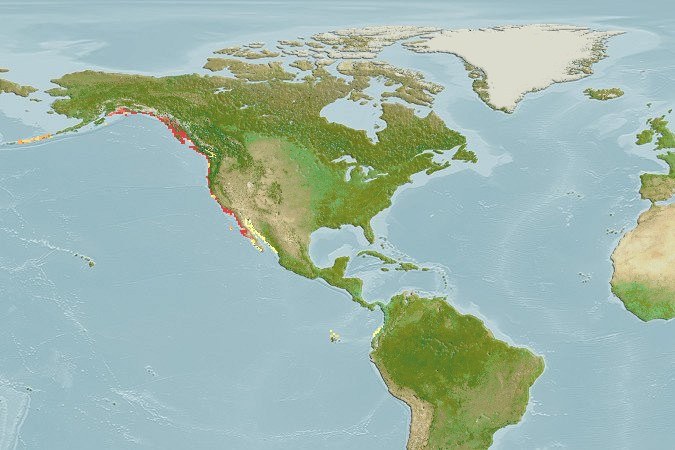
Pollicipes polymerus, commonly known as the gooseneck barnacle or Pacific goose barnacle, is a cirripede crustaceans belonging to the family Pollicipedidae and the order Pedunculata. The scientific name comes from Latin: ‘Pollicipes‘ means ‘thumb‘ and ‘polymerus‘ refers to its many appendages. This species inhabits the rocky intertidal zone of the northeastern Pacific coast, from southeastern Alaska to Baja California, where it attaches to rocks exposed to heavy surf. Its biology and morphology are very similar to those of the Atlantic gooseneck barnacle (Pollicipes pollicipes), a closely related species both phylogenetically and gastronomically.
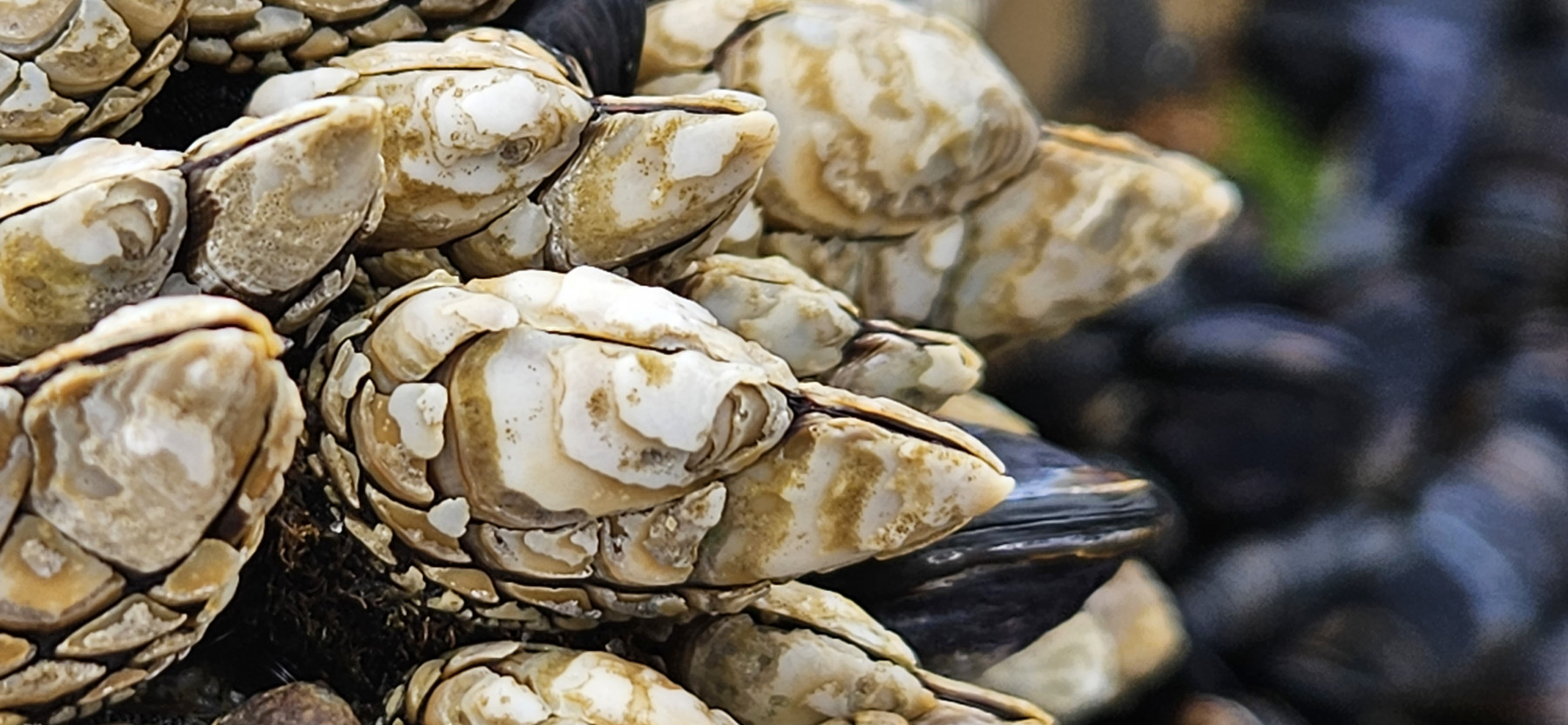
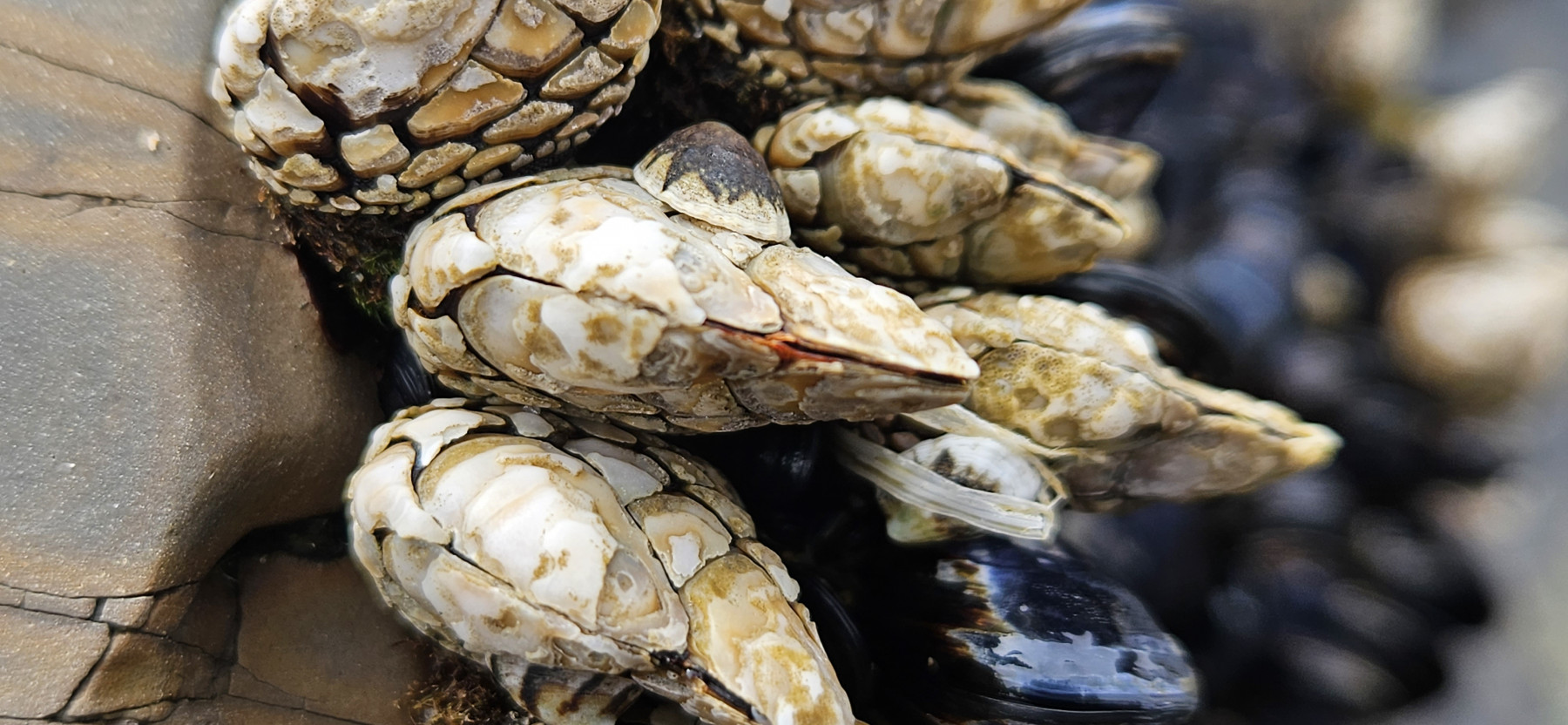
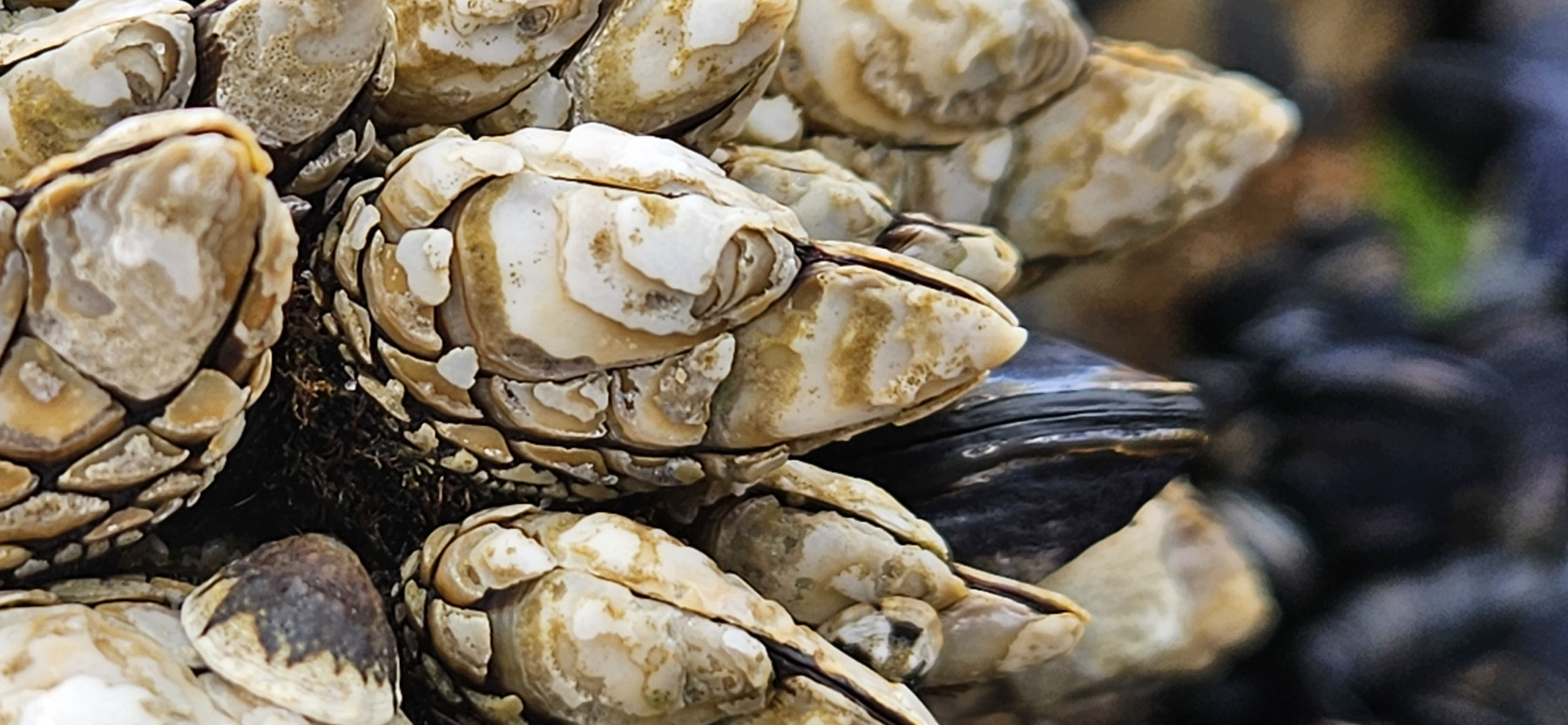
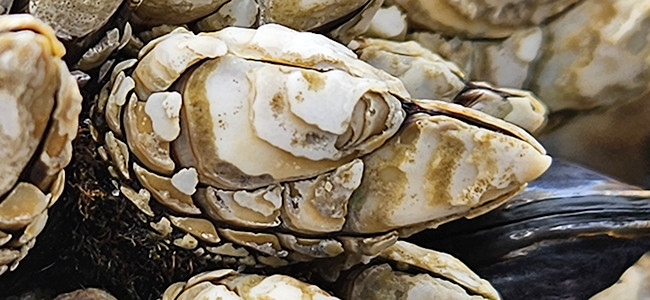
Pollicipes polymerus has a body divided into two parts: the peduncle and the capitulum. The peduncle, which can reach 8 to 10 cm in length, has a fleshy texture, dark coloration, and is covered with calcareous spicules that provide strength and flexibility against wave impact. The capitulum, located at the distal end, measures up to 5 cm and contains the vital organs, protected by five main calcareous plates and multiple secondary plates. The overall color ranges from dark brown to grayish. To distinguish it from similar species such as Lepas anatifera (a pelagic species), one can observe the number of plates in the capitulum and its fixed coastal habitat, since Lepas anatifera lives attached to floating objects in the open ocean.
This barnacle is a passive suspension feeder. It extends its cirri-feather-like jointed structures — from the capitulum in a fan shape, orienting them perpendicular to the water flow. Through rhythmic movements that can reach up to 140 oscillations per minute, it captures food particles such as phytoplankton, copepods, amphipods, larvae of other crustaceans, small bivalves, bristle worms, hydrozoans, and detritus. These particles are directed toward the mouth and selected by buccal organs equipped with chemoreceptors. In its ecosystem, it competes directly with Mytilus californianus (California mussel) for space on the rocky substrate.
Pollicipes polymerus is hermaphroditic but requires cross-fertilization. Reproduction occurs mainly from April to October, peaking in July, and up to four spawning events can take place per year. The ovaries, located in the peduncle, release between 100,000 and 240,000 eggs per clutch, which are fertilized internally via an extendable penis that delivers sperm into the capitulum cavity of a neighboring individual (if located within 20 cm). The larvae go through planktonic nauplius and cypris stages over approximately 40 days before permanently settling using cement glands either on the substrate or even on other adult barnacles.
This species displays strong ecological interactions. It is preyed upon by birds such as Larus glaucescens (glaucous-winged gull) and Haematopus bachmani (black oystercatcher), as well as sea stars like Pisaster ochraceus and Leptasterias hexactis. Classic studies like that of Robert Paine (1966) in Makah Bay demonstrated that its presence, along with that of the mussel, strongly influences local biodiversity. Furthermore, its distribution tends to be aggregated, forming dense rosettes that provide resistance to predation and facilitate larval settlement. Despite its gastronomic appeal (highly prized for its intense ocean flavor), its commercial exploitation in Canada ceased in 1999 due to alarming population declines.
Photos: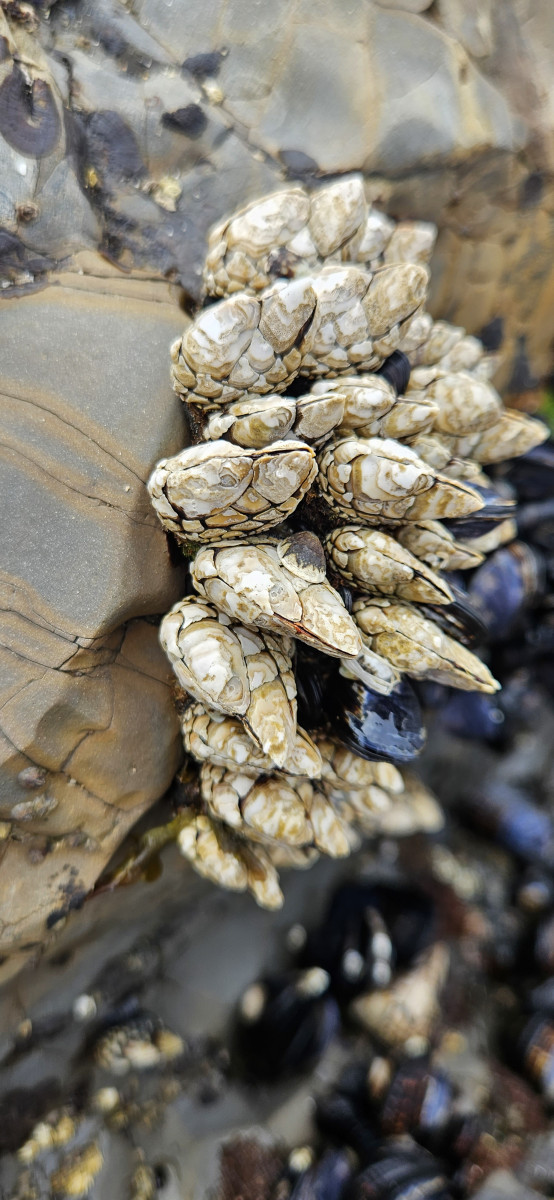
 from
from