
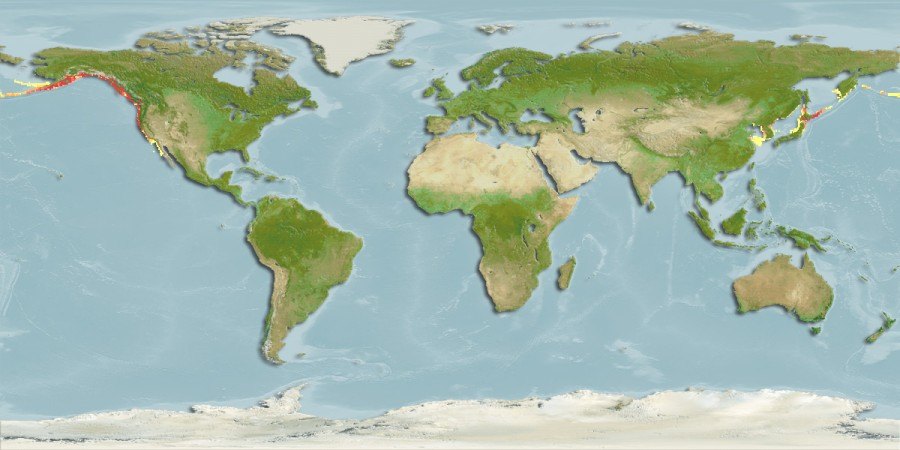
Tonicella lineata, commonly known as the lined chiton, is a species of chitons belonging to the family Mopaliidae within the order Chitonida. Its scientific name refers to the distinctive lines decorating its valves (‘lineata’ means ‘lined’ or ‘striped’ in Latin). This species inhabits the North Pacific, ranging from the Aleutian Islands of Alaska down to San Miguel Island in California, as well as the Sea of Okhotsk and northern Japan. It occupies intertidal and subtidal zones down to depths between 30 and 90 meters, typically found on rocks covered with coralline algae, where its coloration allows effective camouflage.
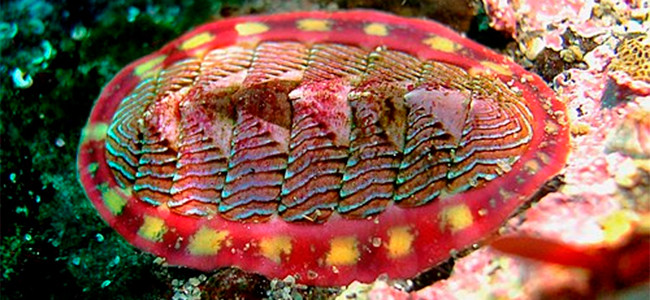
Tonicella lineata is a small chiton measuring between 2.5 and 5 cm in length. Its body consists of eight plates (valves) adorned with straight or zigzag lines in shades of blue, purple, or black, set against a background that can vary from brown, red, orange, yellow, to bright blue. The girdle is smooth and displays reddish or pinkish tones with white or yellow spots. It can be distinguished from similar species such as Tonicella lokii, which has radial bands on the girdle, or Tonicella undocaerulea, which lacks the dark border on the blue lines. Another similar species is Mopalia spectabilis, recognizable by its hairy girdle and wavy lines, contrasting with the smooth girdle of Tonicella lineata.
This chiton feeds primarily on encrusting coralline algae, mainly from the genus Lithothamnion, scraping them off rocks with its radula, a toothed organ typical of molluscs. Living on rocks covered with these algae, its diet consists almost exclusively of them, reinforcing its camouflage and ecological role as a herbivore specialized in this substrate. It is commonly found in habitats with dense red algal coverage, often sharing space with other benthic invertebrates.
The reproduction of Tonicella lineata typically occurs in spring, likely triggered by an increase in phytoplankton. Eggs hatch within a few days into non-feeding planktonic trochophore larvae, which rely on yolk reserves before settling on coralline algae-covered rocks, where they undergo metamorphosis. Juveniles then develop benthically and begin independent feeding. The species is gonochoric (separate sexes) with external fertilization.
A notable curiosity about Tonicella lineata is its ability to curl into a ball when dislodged from the substrate, a defensive behavior similar to many isopods. It is often found in beds of purple sea urchins (Strongylocentrotus purpuratus), which is interpreted as a protective strategy against predators such as the sea stars Pisaster ochraceus and Leptasterias hexactis. It can also be preyed upon by benthic fish, harlequin ducks, and sea otters. Its respiratory system relies on ctenidia (gills) located in the pallial grooves, through which water flows, carrying away waste and ensuring efficient excretion even under low activity conditions.
Photos: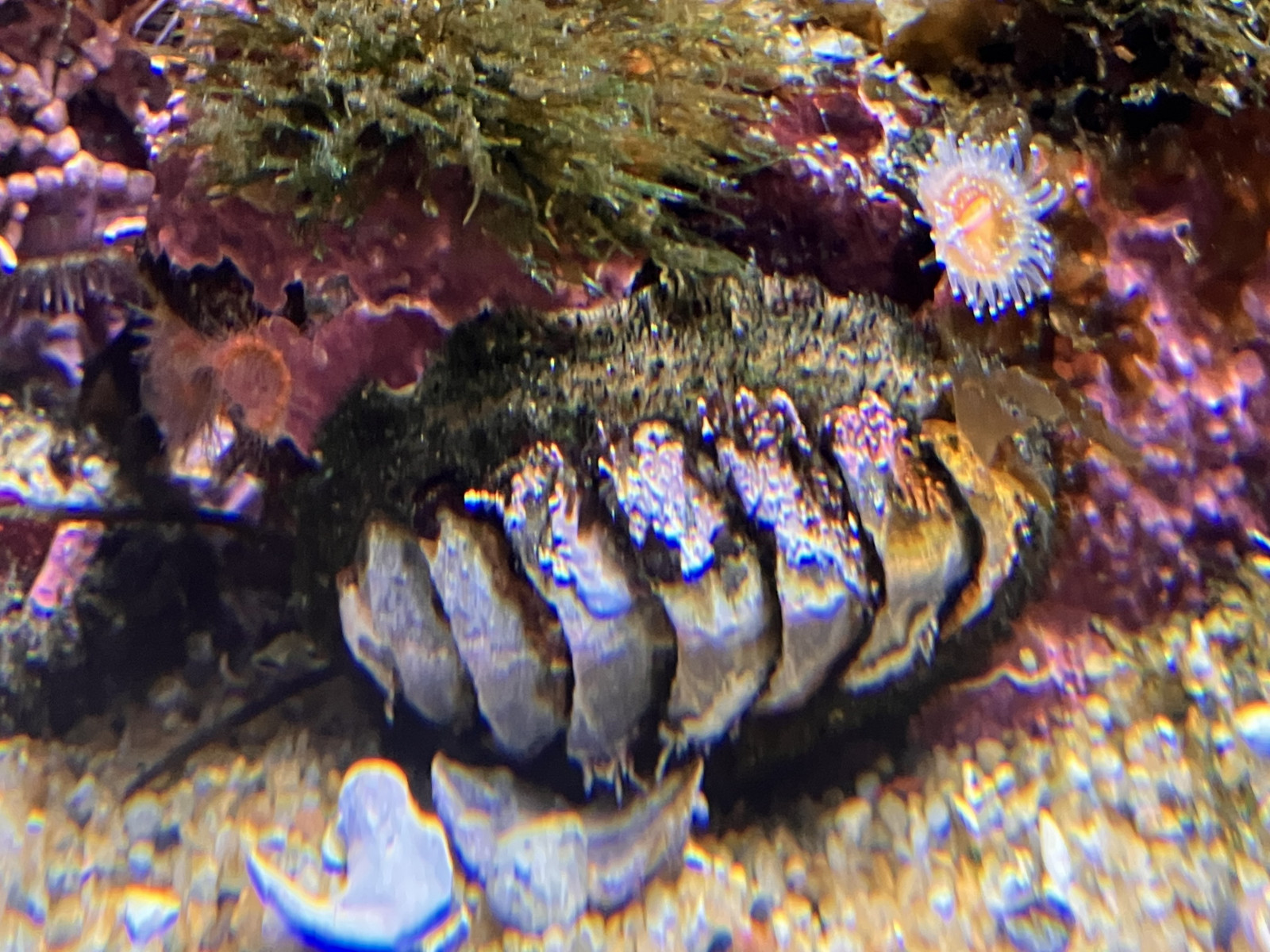
 from
from