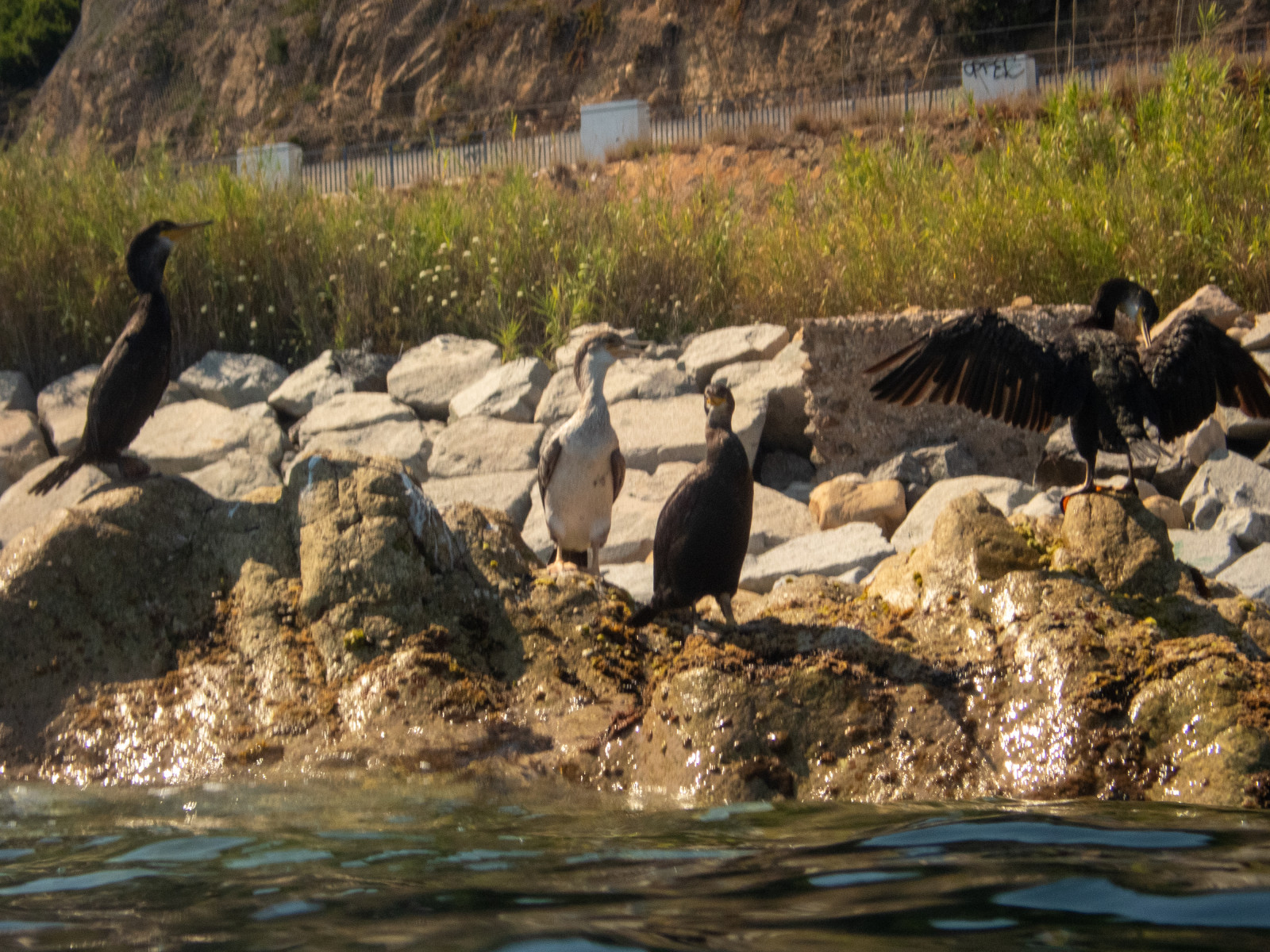
Gulosus aristotelis is a medium-sized bird, measuring between 68 and 78 cm in length with a wingspan of 95 to 110 cm. It has a slender body, long neck, and black plumage with greenish iridescence, especially glossy during the breeding season. At this time, adults display a crest or tuft on the forehead, which gives rise to its common name, the ‘shag‘. Its bill is long, thin, and hooked at the tip, with a yellow base as well as yellow corners of the mouth. Juveniles have a lighter, almost white belly and browner tones. To distinguish it from the similar Phalacrocorax carbo (great cormorant), note its smaller size, more slender body, greenish plumage sheen, frontal crest in adults, and the presence of only twelve tail feathers (compared to fourteen in Phalacrocorax carbo).
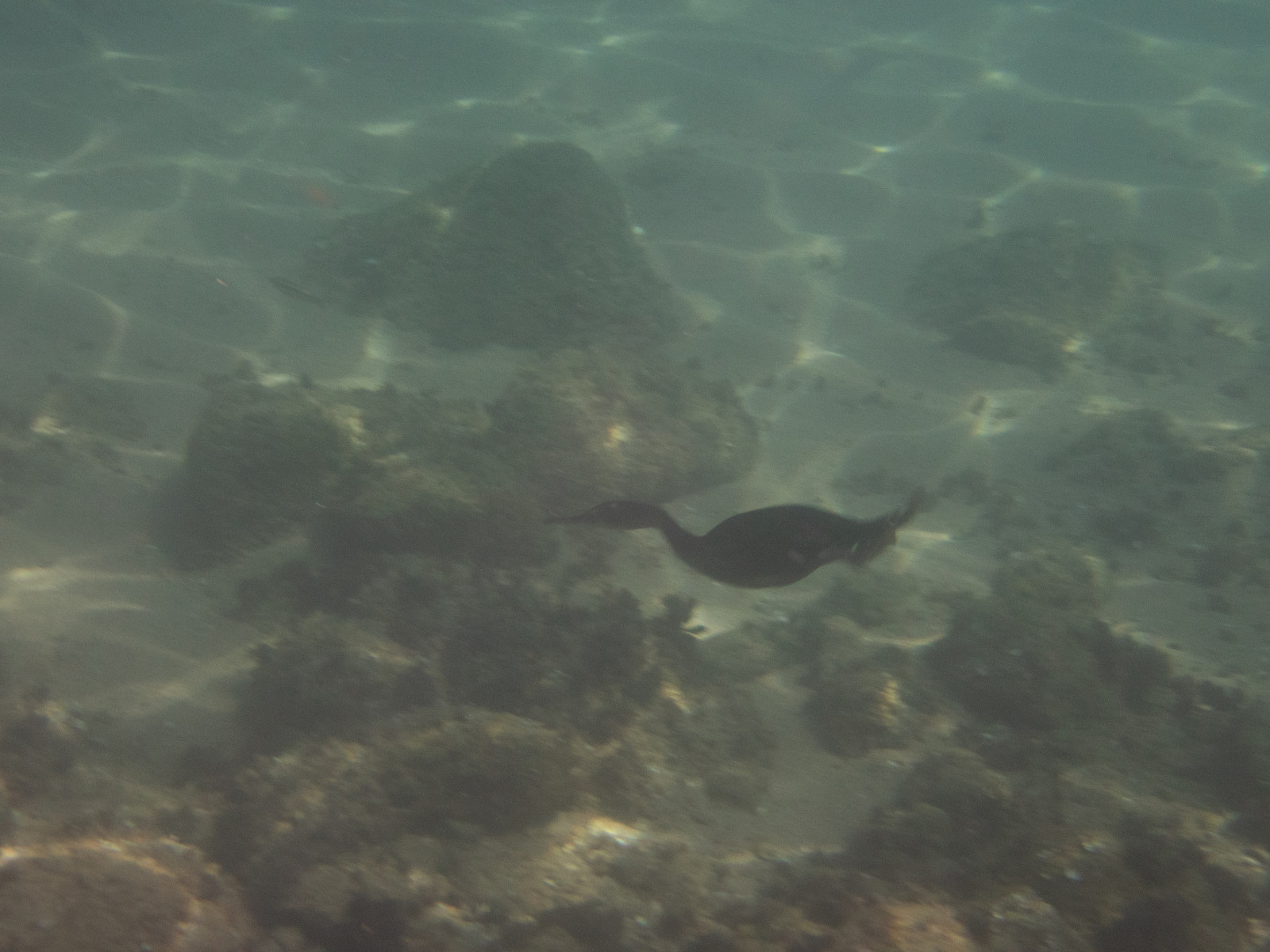
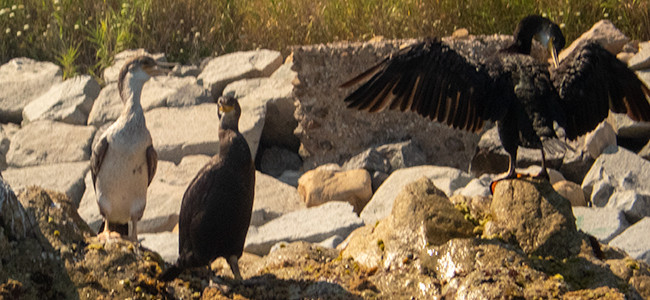
This species is primarily piscivorous. The Gulosus aristotelis feeds mainly on marine fish such as Sardina pilchardus (European pilchard), Micromesistius poutassou (blue whiting), Labrus bergylta (ballan wrasse), and Symphodus melops (corkwing wrasse). It is a skilled diver capable of reaching depths up to 45 meters during dives lasting between 20 and 45 seconds. It generally fishes near the coast, rarely venturing more than a kilometer offshore or several kilometers from the colony. After feeding, it is common to see it perched on rocks or coastal structures with wings outstretched to dry its plumage.
Reproduction of Gulosus aristotelis occurs in colonies located on cliffs, crevices, or coastal caves. The breeding season starts between late February and May. They build nests using seaweed, branches, and other plant materials cemented with excrement. Usually, they lay two to three pale blue eggs, incubated for about 30 days by both parents. The chicks hatch helpless and remain in the nest for about 50 days until ready to fly. They reach sexual maturity around four years of age. A second clutch may be laid if the first fails.
Gulosus aristotelis is classified as Vulnerable by the IUCN Red List due to population declines from various threats. These include overfishing, marine pollution (such as the Prestige oil spill), bycatch in gillnets, disturbance from recreational boats, and nest predation by invasive species like Rattus rattus (black rat) and Neovison vison (American mink). In Galicia, the Cíes Islands host the world’s largest colony, with over 2,500 breeding pairs. This species also exhibits a curious behavior after fishing: it often perches on rocks with wings spread in the sun because its plumage is not completely waterproof, which allows it to dive more effectively.
Photos: