
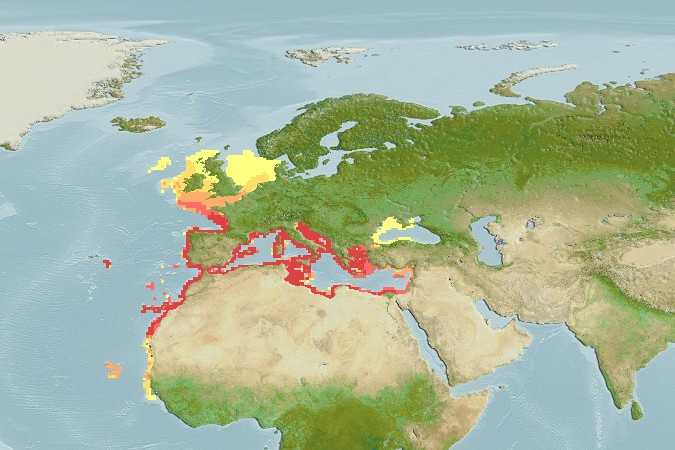
Pagellus erythrinus, commonly known as the ‘common pandora‘ or ‘common sea bream‘, is a marine fish of the family Sparidae. The species’ scientific name derives from Latin ‘erythrinus‘, meaning ‘red‘, referring to the pinkish or reddish coloration characteristic of this fish. The ‘common pandora‘ is widespread in the Mediterranean Sea, the Black Sea, and the eastern Atlantic Ocean, from the coasts of Norway down to Senegal, including the Canary Islands and Madeira. It inhabits various marine habitats such as sandy, muddy, or rocky bottoms at depths ranging from 20 to 250 meters, though it can be found as deep as 400 meters.
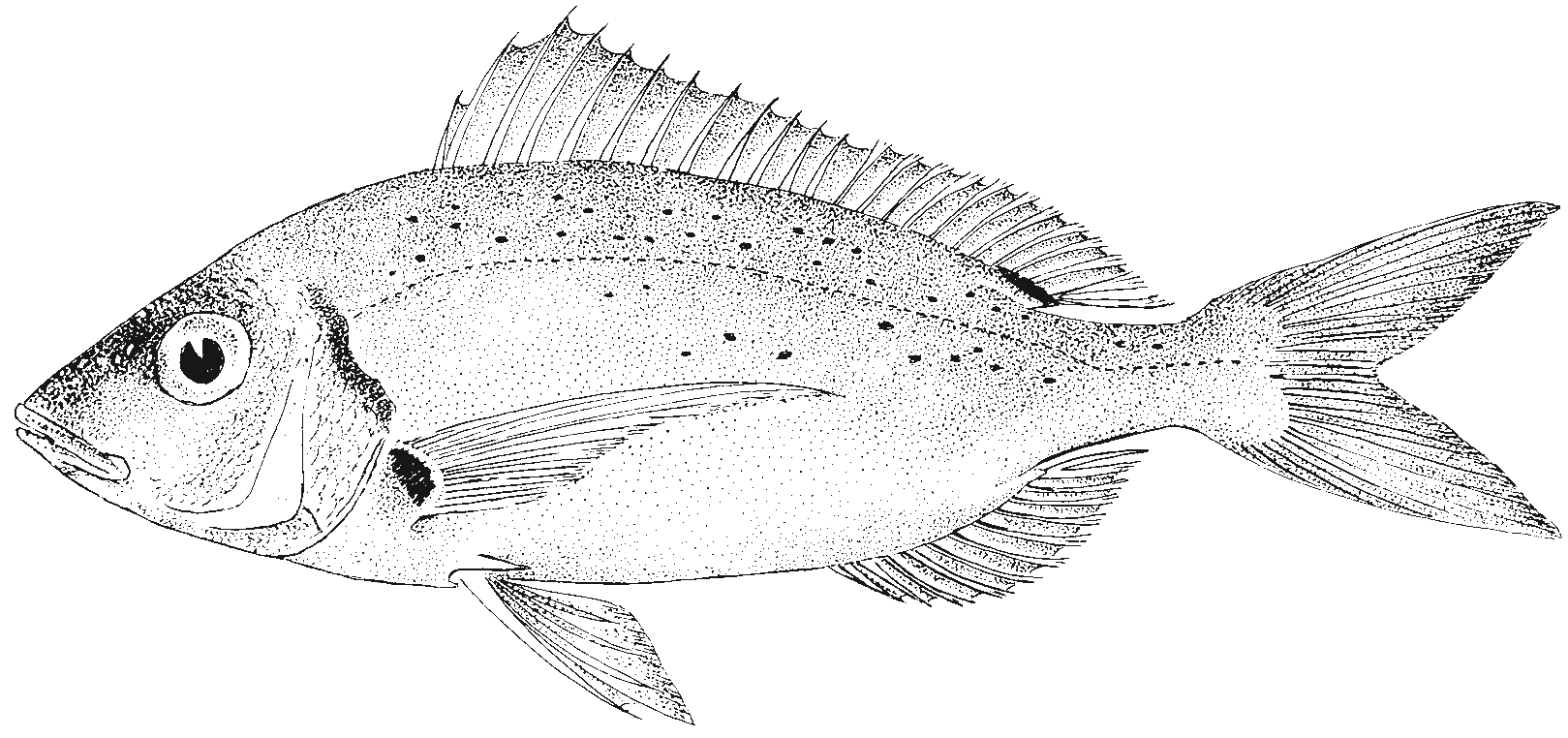
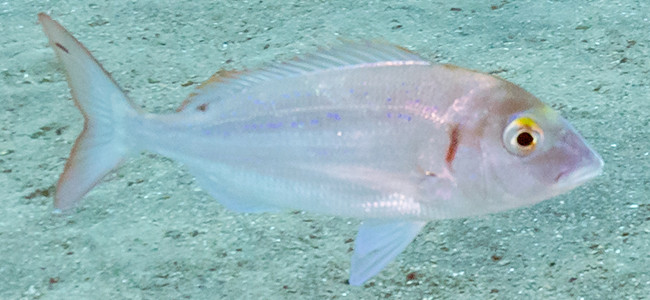
Pagellus erythrinus has an oval and laterally compressed body, averaging between 15 and 25 cm in length, although some individuals can reach up to 60 cm. Its coloration varies from pink to reddish on the back, becoming more silvery on the sides and belly. A distinctive feature of this species is a dark spot behind the head, more visible in juveniles. The dorsal fin is long, with a spiny section followed by soft rays, while the pectoral fins are long and pointed. Compared to other species in its genus, such as Pagellus acarne (axillary sea bream), Pagellus erythrinus is distinguished by its larger size and more intense pink coloration.
Regarding its diet, Pagellus erythrinus is an omnivorous fish with a carnivorous tendency. Its diet mainly includes small benthic invertebrates such as molluscs, crustaceans, and bristle worms, although it also feeds on small fish and algae. The ‘common pandora‘ typically forages near the seafloor, where it finds a wide variety of prey. Its varied diet allows it to adapt to different environments and food availability in its habitat.
Reproduction in Pagellus erythrinus is oviparous and protandrous hermaphroditic, meaning most individuals begin life as males and later transform into females upon reaching a larger size or older age. Spawning occurs during spring and summer, when females release eggs into open waters that are externally fertilized by males. The eggs are pelagic, floating in the water column until they hatch. The larvae undergo a planktonic phase before settling on the seabed as juveniles.
An interesting fact about Pagellus erythrinus is its ecological and commercial importance. In marine ecosystems, it acts as a predator of small invertebrates and, in turn, serves as prey for larger fish and seabirds. Economically, the common pandora is highly valued in commercial fisheries, especially in the Mediterranean, where its flesh is prized for its delicate flavor and texture. It is one of the most sought-after species in fisheries, although it is also caught recreationally. Additionally, due to its abundance and adaptability to different habitats, it is a staple species in fish markets across many regions.
Photos:
 from
from