
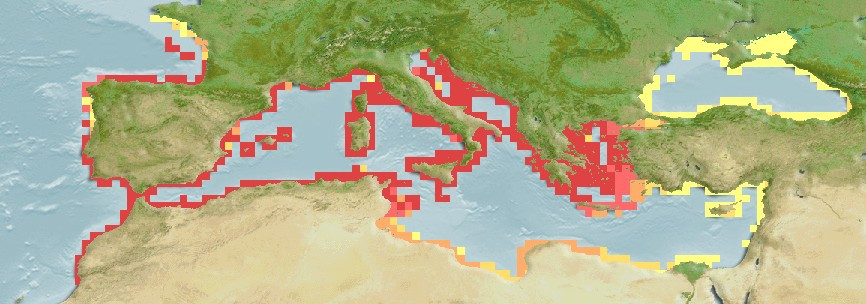
Symphodus roissali, commonly known as the black wrasse or mottled green wrasse, is a fish species belonging to the family Labridae. Its scientific name honors the French naturalist Henri Louis Duhamel du Monceau, whose middle name is ‘Roissal‘, which gives the species its specific epithet. Symphodus roissali is primarily distributed in the Mediterranean Sea but can also be found in the northeastern Atlantic—from the coasts of Portugal to southern Morocco—and in some areas of the Black Sea. It inhabits shallow coastal waters, typically between 1 and 30 meters deep, preferring rocky substrates, algal beds, and Posidonia seagrass meadows where it finds shelter and food.
Symphodus roissali is a small-sized fish, generally measuring between 10 and 13 cm, although some individuals can reach up to 15 cm. Its body is elongated and laterally compressed, covered with small scales. The coloration varies according to age, sex, and season. Adult males typically exhibit darker tones including brown, greenish, and bluish hues, along with irregular spots and lines along their flanks. Females and juveniles have a more muted coloration with lighter green and brown shades. A distinctive characteristic of this species is the presence of a dark spot at the base of the pectoral fin and a smaller spot on the caudal peduncle, which helps differentiate it from other species in the genus, such as Symphodus mediterraneus, which has a lighter coloration and lacks this combination of spots.
Regarding diet, Symphodus roissali is carnivorous, feeding mainly on benthic invertebrates. Its diet includes small crustaceans, molluscs, bristle worms, and other small organisms found among rocks and algae. It uses its small but strong mouth to extract prey from crevices and gaps, adapting to various substrates while foraging. This varied diet allows it to thrive in diverse coastal marine environments.
The reproduction of Symphodus roissali occurs during spring and summer. It is an oviparous species exhibiting typical wrasses reproductive behavior where males play a key role. Males build nests with algae and other materials on the seafloor, generally among rocks or dense vegetation. These nests serve as sites where females lay eggs, which are then exclusively cared for by the males. Males protect and fan the eggs until hatching and show aggressive territorial behavior during this period.
An interesting fact about Symphodus roissali is its subtle ability to change coloration to blend with its surroundings, aiding in predator avoidance and stealth while hunting. Though small and of low commercial value, it plays an important role in coastal ecosystems as both predator of small invertebrates and prey for larger fish. Its reproductive and territorial behaviors also make it a subject of interest in marine ecological studies.
Photos: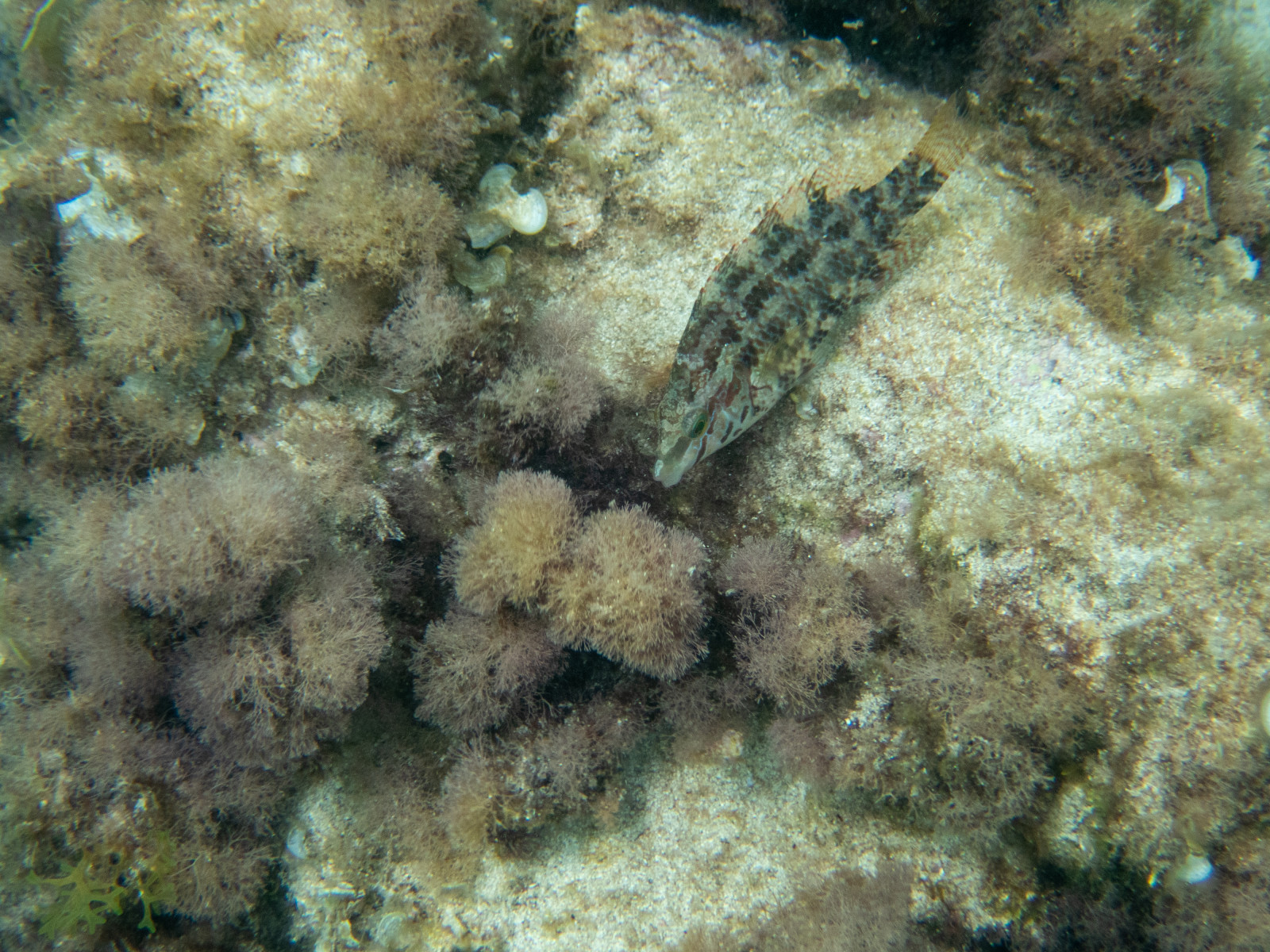
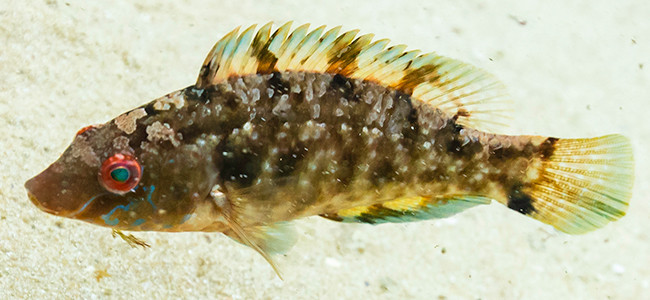
 from
from