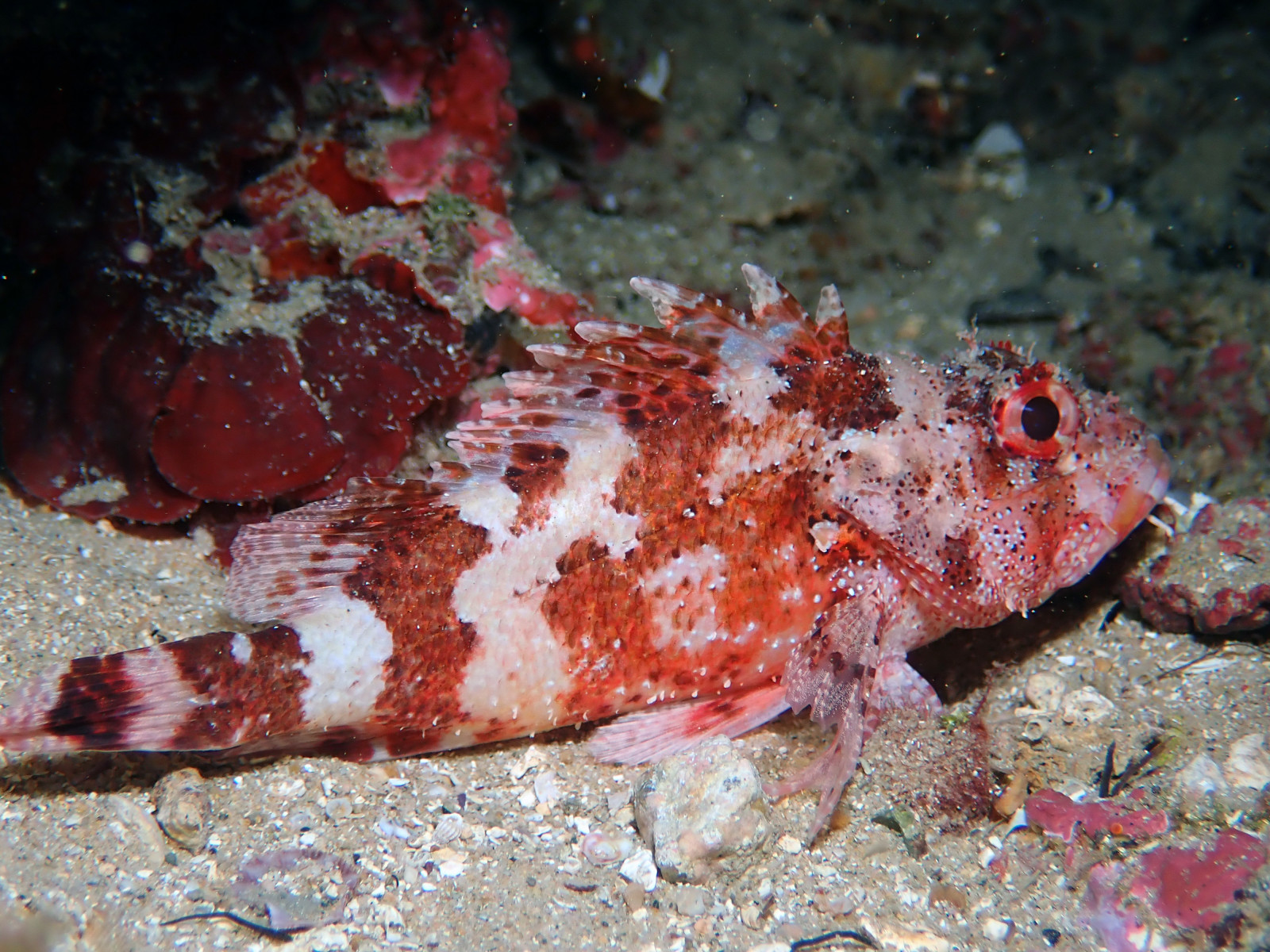
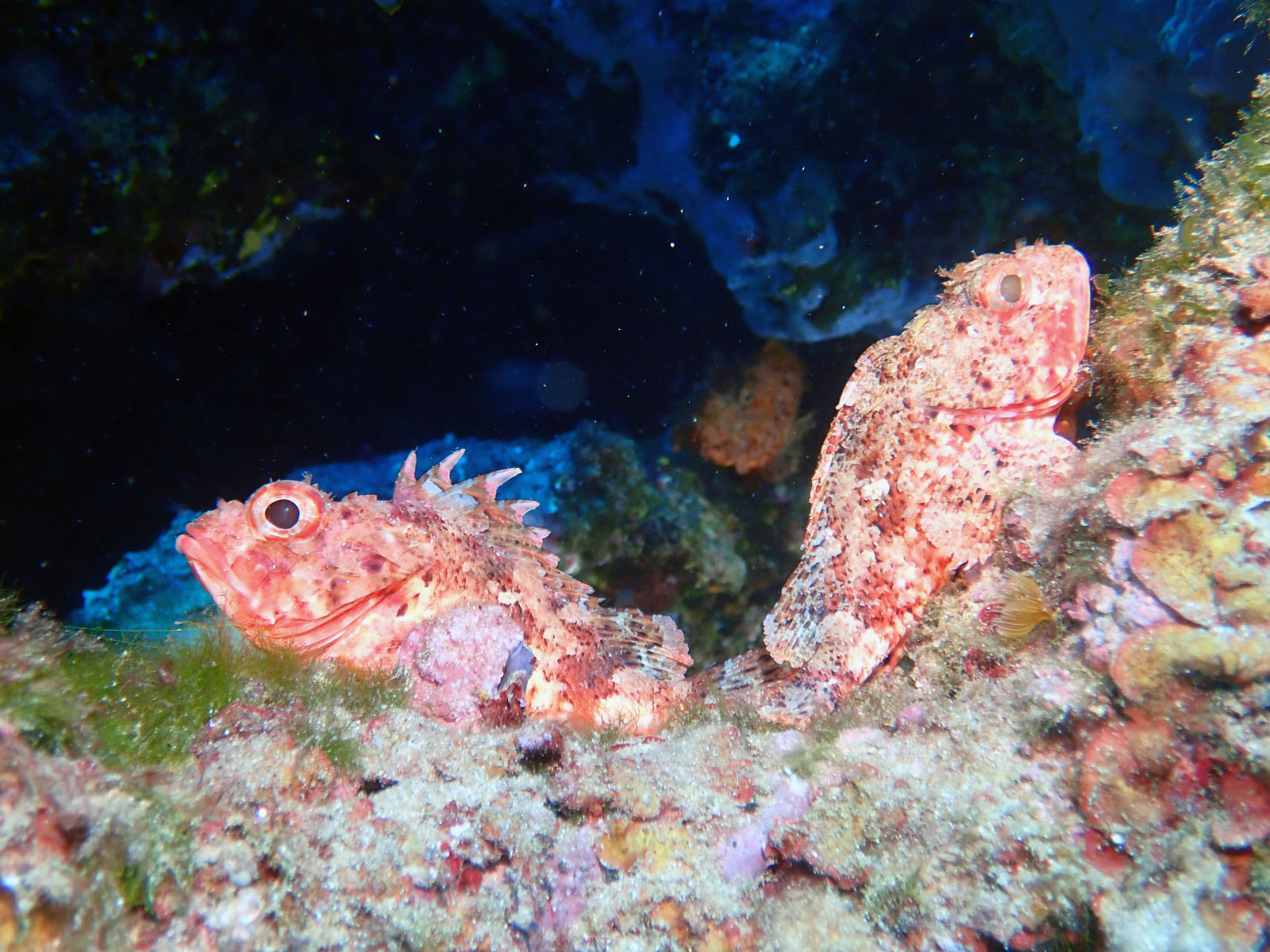
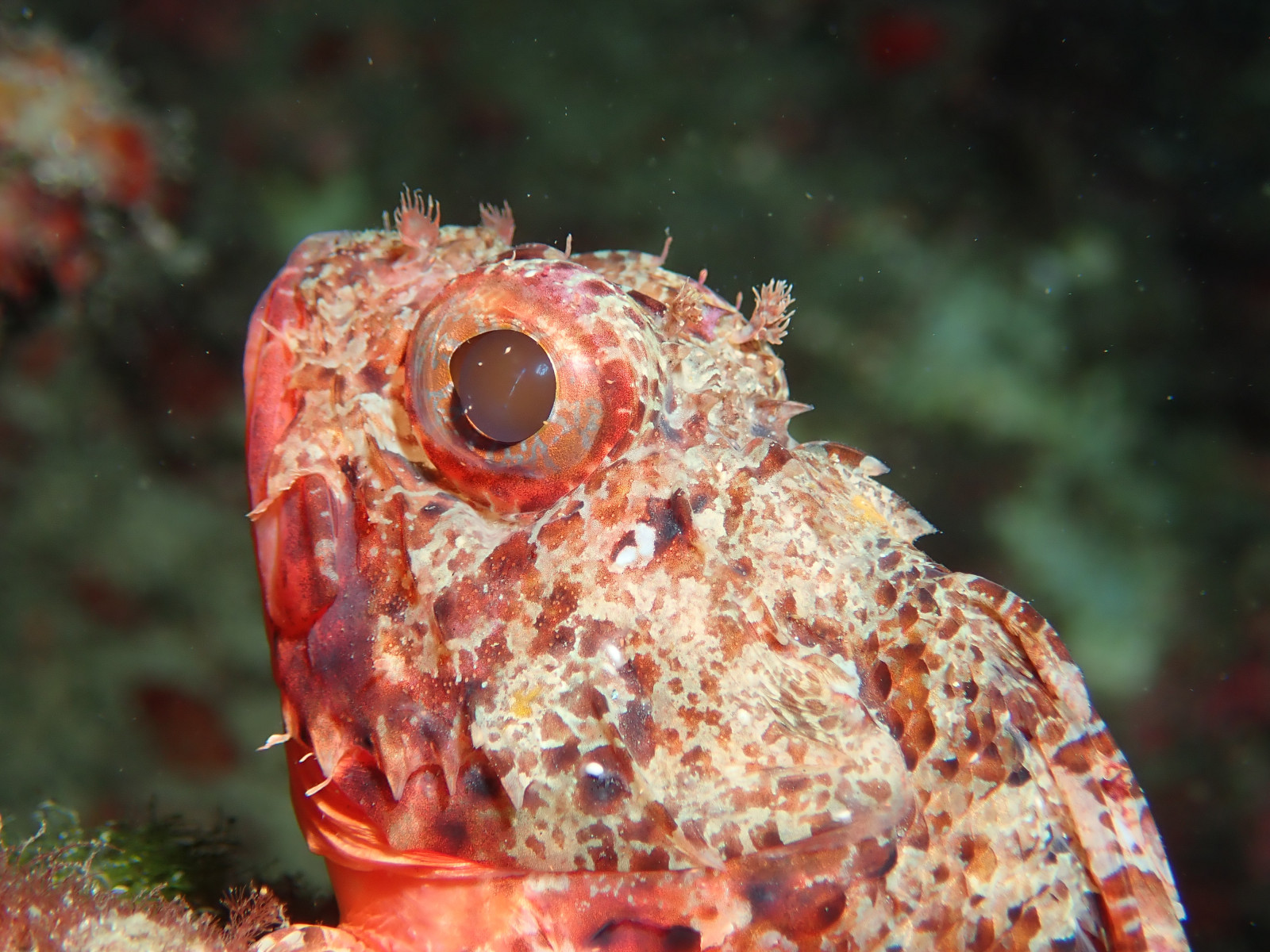
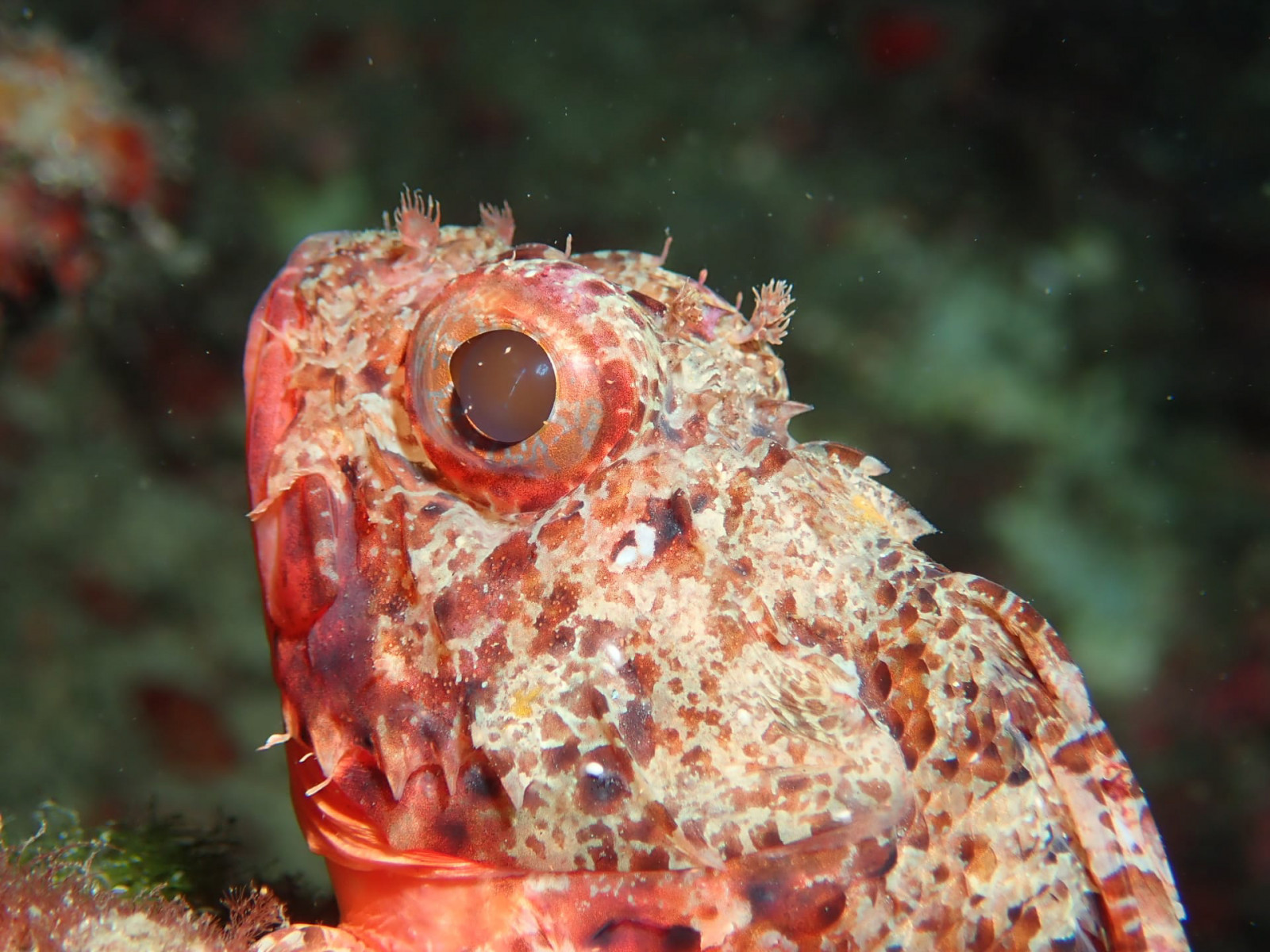
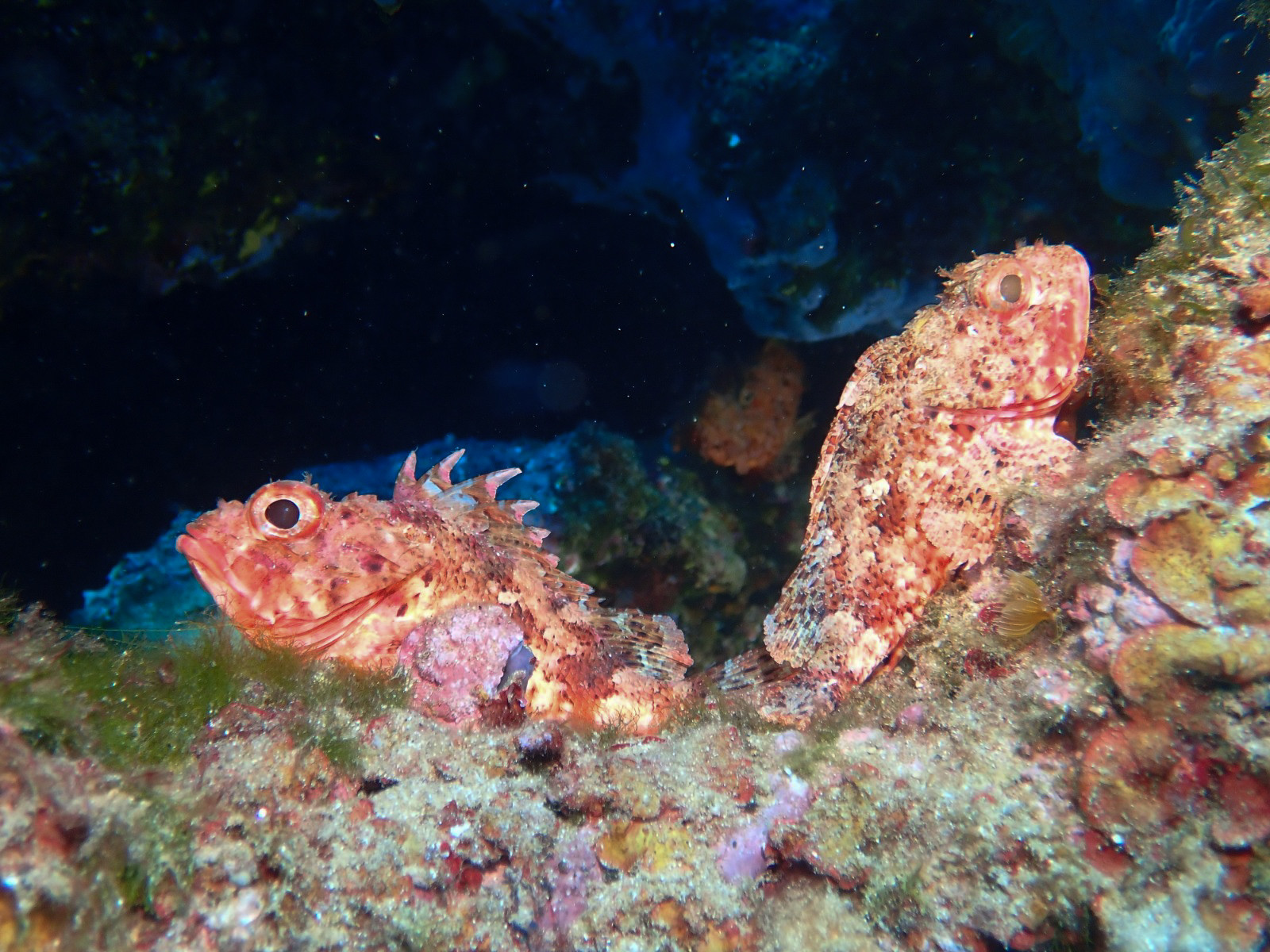
Scorpaena notata also known as small red scorpionfish is a species of the family Scorpaenidae and belongs to the order Scorpaeniformes. It is a common species in shallow coastal and rocky waters, although sometimes it is also possible to see it in sandy or gravel areas, or even at depths of up to 300 meters. Its distribution includes both the Mediterranean Sea and the eastern Atlantic Ocean, from Madeira, Cape Verde Islands, Morocco, Canary Islands to the Senegalese coasts. It is also present in the waters of the Black Sea.

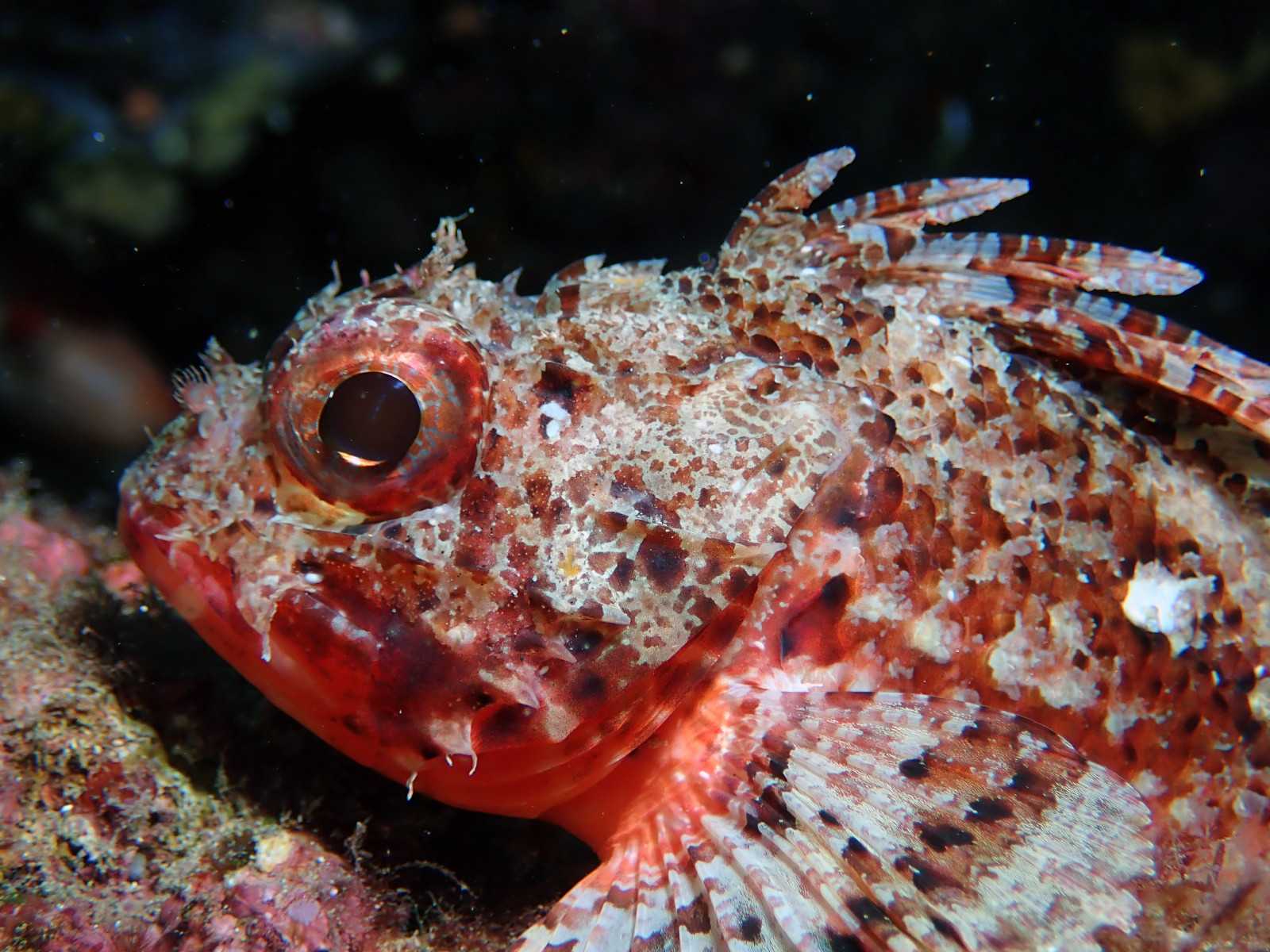
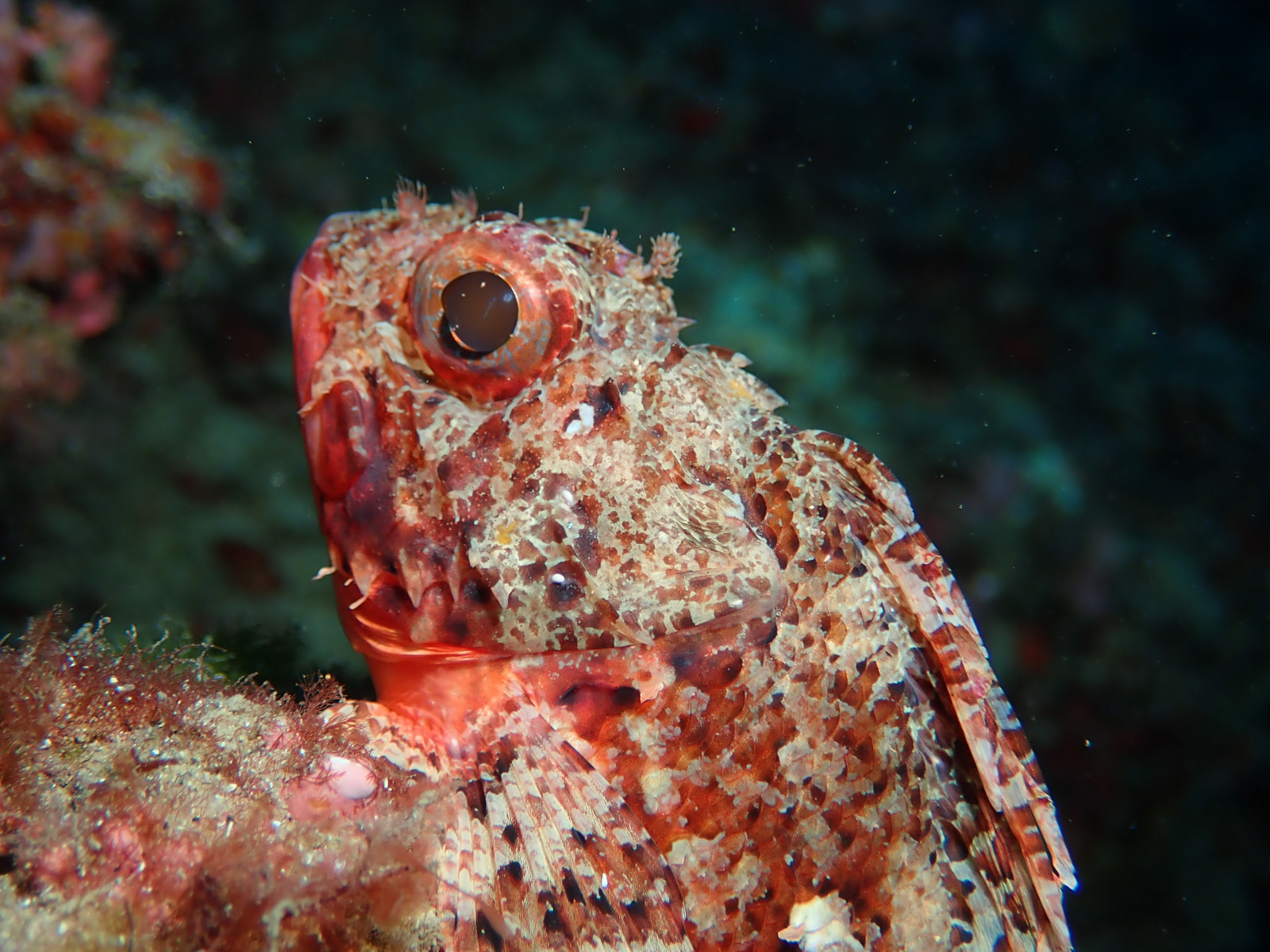
The most common size of Scorpaena notata is around 15 cm in length, although specimens up to 24 cm have been described. With a robust body, the diameter of the head is larger than the length of the head. One of the characteristic and distinctive features of this species is the absence of cirri (cutaneous appendages) under the lower jaw of its specimens. It is also characterized by the absence of branched appendages on the upper part of the eyes, or if it has them, they are very short. Another distinctive feature is the presence of a depression just behind the eyes, called occipital depression. In general, the coloration of Scorpaena notata is based on a reddish-brownish color, with a multitude of dark brown spots. It has a dorsal fin, formed by 12 rays followed by 9 soft rays. In the spiny part of this fin, they have a prominent black spot, which is located towards the end of the spiny region. The pectoral fins are wide and have between 17 and 19 soft rays. The anal fin consists of 3 spines and 5 to 6 soft rays, while the caudal fin is rounded and rounded. With the exception of the dorsal fins, the rest of the fins have a mottled pattern with dark brown, dark red or whitish spots. Specimens living in deeper waters tend to have more intense red coloration than those living in shallower waters.
Scorpaena notata feeds voraciously on crustaceans, mollusks and occasionally small fish. Its strategy to capture its prey is to remain completely motionless on the seabed, unnoticed with its coloration, until the prey passes right in front of it. When this happens, and with an extremely fast movement, it engulfs the victim by surprise, which does not have time to react.
During the months of May to June, in the Mediterranean Sea, is when Scorpaena notata spawns. The clutches consist of gelatinous masses inside which the fertilized eggs are deposited.
Scorpaena notata is often confused with other species of the same genus. To distinguish it, we need to consider three features together: the occipital pit, the absence of a mandibular beard and the very short or absent appendages above the eyes.

-
Occipital pit present. There is a depression behind the eyes, before the origin of the dorsal fin. This distinguishes it from Scorpaena maderensis, which lacks an occipital pit. The pit is also present in Scorpaena porcus and Scorpaena scrofa, so it must be considered together with the following features.
-
Lower jaw without a beard. It lacks skin flaps beneath the lower jaw. This distinguishes it from the dense beard of Scorpaena scrofa and the small white skin flaps of Scorpaena maderensis. It shares this absence with Scorpaena porcus. To verify it, the entire underside of the lower jaw must be visible.
-
Supraocular appendages very short or absent. The appendages above the eyes are very short or absent. This distinguishes it from the long appendages characteristic of Scorpaena porcus. This feature must be considered together with the absence of a mandibular beard and the presence of an occipital pit.
Details to look for
The arrow indicates the depressed region behind the eye, before the origin of the dorsal fin. It should not be confused with the space between the eyes.
The arrow points to the lower edge of the jaw, which lacks the dense beard of skin flaps characteristic of Scorpaena scrofa. Small appendages along the edges of the lips should not be confused with those growing beneath the lower jaw.

The arrows indicate the small appendages in the eye region. Their limited development contrasts with the long appendages characteristic of Scorpaena porcus. They should not be confused with the nasal appendages, located further forward towards the snout.
Comparison with the other species
| Species | Appendages above the eyes | Skin flaps beneath the lower jaw | Occipital pit |
|---|---|---|---|
| Scorpaena maderensis | Short | Two pairs of small white skin flaps, without forming a dense beard | Absent |
| Scorpaena notata | Very short or absent | Absent; no mandibular beard | Present |
| Scorpaena porcus | Long and prominent, approximately as long as the eye diameter | Absent; no mandibular beard | Present |
| Scorpaena scrofa | Generally small or absent; may be paddle-shaped | Numerous and well developed, forming an irregular beard | Present |
Photos: